
Protect Your Katy Pool From Freezing Temperatures
Freeze warning hits Texas. The temperature doesn’t dip below freezing in Katy very often, but when it does, the consequences can be severe. In February 2021, an unprecedented winter storm swept across Texas, leaving millions without power and causing costly damage to homes and pools. The upcoming cold snap forecast for this weekend brings back memories of that event. As the owner of Katy Blue Pool Services, I’ve spent decades helping neighbors navigate extreme weather, and I know that a little preparation goes a long way.
In this article, We’ll walk you through how to understand a freeze warning and proactively protect your pool when temperatures plummet. We’ll cover why freezes damage pool equipment, what steps you should take in advance, and what to do if the power goes out. I’ll answer common questions about a freeze warning and share insider tips in a friendly, conversational tone. Think of it as chatting with a neighbor over coffee – just with more talk about pumps, pipes and cold weather.
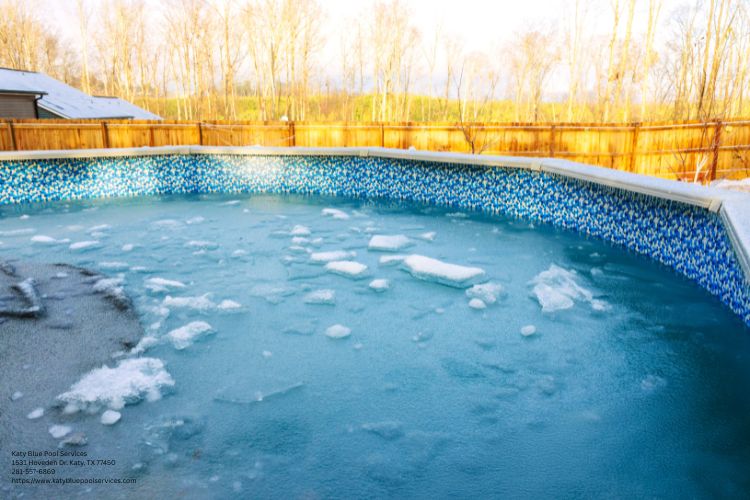
Why Freezing Temperatures Are a Threat to Pools
Water is a curious thing. At higher temperatures, it flows freely; as it freeze,s it expands. That expansion exerts pressure on whatever contains it. When water sitting in your pool’s pipes, pumps, filters or heaters freezes, it can crack housings, split PVC fittings, damage heater manifolds and pop off unions. In other words, still water becomes your pool’s worst enemy during a freeze. Movement is your friend – constantly circulating water is far less likely to freeze.
This is why freeze protection systems on modern pools automatically activate the pump when air temperatures dip into the 30s. Continuous circulation keeps water moving through every line, preventing ice formation. For pools without automation, you’ll need to manage the process manually. But don’t worry – I’ll teach you how.
A Timeline for Freeze Preparation
Two Weeks Before the Freeze
Inspect and repair leaks. Small drips or air leaks may seem like no big deal in mild weather, but during a freeze warning, they can become big problems when the mercury drops. Check around the pump, filter, valves and suction lines for moisture or hissing sounds. Fixing a tiny leak now is much cheaper than replacing a cracked pump housing later.
Clean and baseline your system. Empty skimmer and pump baskets, backwash or clean your filter, and verify that the filter pressure returns to normal afterward. Inspect O‑rings and gaskets; lubricate or replace them if they’re cracked or brittle. A clean system with good seals is less likely to experience clogs or air leaks during a freeze.
Confirm freeze protection settings. Many automation panels and smart controllers have a “freeze protect” mode that kicks on at around 36–38 °F. Make sure it’s enabled and that the temperature sensor is accurate. If you’re not sure how to check this, consult your owner’s manual or call a professional. It’s far better to find out now that a sensor is faulty than when the ice is forming during a freeze warning.
Wrap exposed plumbing and equipment. Pipes and valves above ground are particularly vulnerable. Cover them with foam pipe wrap, towels secured with waterproof tape, or insulated faucet covers. Pay special attention to unions, diverter valves and heater connections – these are common failure points. Avoid wrapping components in plastic alone; non‑breathable bags trap moisture and provide little insulation.
Plan your pump runtime. If you have a variable‑speed pump, program a low RPM you can bump up during freeze alerts. For single‑speed pumps, plan to run them continuously on freeze nights. Have foam wrap, union plugs, extra O‑rings, duct tape, granular shock and a battery work light on hand. Think of it as a winter survival kit for your pool.
48–72 Hours Before the Freeze
Balance your water chemistry. Cold water slows chemical reactions. By raising free chlorine to the high end of the safe range and ensuring pH and alkalinity are within their targets, you start the freeze period with clean water. Balanced water protects surfaces and equipment and makes post-freeze recovery easier.
Clear debris. Skim leaves, empty baskets and brush steps and corners. Debris not only steals chlorine but can clog skimmers right when you need flow the most.
Verify valves and water features. Adjust valves so water circulates through all above‑grade lines. If you have raised spas, waterfalls or bubblers, plan how you’ll run them to keep those lines moving. Running only the spa can leave pool lines vulnerable, so keep the entire system circulating.
Test freeze mode. Manually force a freeze‑protect run to ensure the pump spins up and water moves across every exposed run. Listen for the pump starting at the correct setpoint and verify that water is flowing from all returns.
The Night Before and Day Of the Freeze
Run the pump continuously. Continuous water movement is your number one defense against frozen lines during a freeze warning. If your automation doesn’t do this automatically, switch the pump to manual mode and let it run around the clock. Resist the temptation to turn it off; short runs allow water to freeze between cycles.
Open the spa spillway. If your pool has a raised spa, allow a gentle spill into the pool. This keeps that line turning without blasting full tilt, which could create wind chill. If wind speeds are high, minimize waterfalls and features that spray water into the air; focus on circulation through the plumbing instead.
Insulate the equipment pad. Wrap exposed pipes and valves with foam covers and drape a breathable blanket or tarp around the equipment pad as a wind break. Leave vents and heater exhausts clear. Think of this as bundling up your equipment in a warm scarf and coat.
Adjust salt systems. Salt chlorinators often shut down in cold water. Turn the cell output down or off and supplement with liquid chlorine if needed. Don’t worry – once temperatures rise, you can return to normal operation.
Maintain normal water level. Keep the water level at the center of the tile or halfway up the skimmer opening. Low water levels expose plumbing to cold air and can cause your pump to lose prime. Top off water as needed and ensure skimmers stay submerged.
Do not heat the pool. It may feel intuitive to warm the water, but running a heater in freezing conditions strains the equipment and can cause damage. Let the circulation system do the work; save the heater for the next summer party.
Remove or secure accessories. Loose accessories like skimmer baskets, pool cleaners and hoses can be damaged by ice or obstruct water flow. Remove them and store them indoors. Ensure directional fittings and return eyeballs are clear and unobstructed.
Add floatable objects. Placing floatable objects such as 2‑liter bottles or basketballs in the water helps ice push upward instead of against pool walls and tiles. It’s like giving the ice a cushion to press on, reducing the risk of cracks.
What If the Power Goes Out?
A deep freeze combined with a power outage is every pool owner’s nightmare during a freeze warning. When the pump stops, water sits still and can freeze quickly. Having a plan will help you stay calm and act fast.
Gather supplies. Keep towels, blankets, foam insulation and basic tools near the equipment pad. Have a flashlight ready so you’re not fumbling in the dark.
Turn off breakers. If the power goes out, immediately flip off the breakers supplying your pool equipment. This prevents the pump from dry starting when power returns.
Drain the pump, filter and heater. Open the air relief on top of the filter and remove the drain plug on the bottom. Remove drain plugs from the pump and take off the pump lid so trapped water can expand safely. Drain the filter by opening its bottom drain, and open the heater drain plugs and union caps so water escapes. Turn off auto‑fill lines and make sure any feed lines are wrapped.
Open check valves and salt cells. Remove check valve lids to release water held above ground. Open the salt cell to remove water inside the pipe. If you can, unplug and remove the cell entirely.
Break the vacuum. After turning off the breaker and opening drains, release any residual pressure by opening the filter air relief. This prevents the vacuum from pulling water back into the system when drains are open.
Cover equipment temporarily. Once drained, wrap the equipment with towels or blankets to provide insulation. You don’t need to worry about airflow now because the pumps and heaters are off.
Wait for ice to melt naturally. When power is restored, resist the urge to flip everything back on immediately. Wait until any ice on the equipment has melted naturally. Turning on the system while ice is present can crack housings and fittings. Once thawed, reinstall all drain plugs and lids, prime the pump with water, and restart the system.
Daily Monitoring During a Freeze
When freezing weather lasts for several days, don’t just set it and forget it. Your pool needs daily check‑ups.
Inspect equipment each morning. Look for ice buildup on pipes and equipment. Make sure water is still flowing from all return jets. Listen for unusual noises from the pump or filter – these could indicate ice forming or a clog.
Avoid cycling the pump. Consistency is key. Don’t manually turn the pump on and off; continuous operation provides the most protection.
Watch filter pressure. A sudden spike in pressure may indicate ice or debris in the system. If pressure jumps, turn off the pump, inspect the filter and clear any blockages.
Increase runtime or insulation if ice forms. If you notice ice starting to form on the pool’s surface or equipment, increase the pump’s speed, run time or add more insulation. Don’t try to break the ice – hitting or chipping ice can crack plaster, tile or vinyl liners. Focus on restoring circulation and let the ice melt naturally.
Recovery After the Freeze
Once temperatures rise above freezing and everything thaws, your work isn’t over. A careful recovery process ensures your pool returns to prime condition.
Inspect for leaks and cracks. Check pump housings, filter tanks, heater unions and salt cell bodies for cracks or new drips. If you see persistent air bubbles at returns or water weeping from seams, you may have freeze damage that requires repair.
Check filter pressure. A large jump in filter pressure could indicate internal damage or ice-packed debris. Clean or backwash the filter as needed.
Rebalance water chemistry. Cold weather slows chemical consumption, but long pump run times can deplete chlorine. Test and adjust pH and chlorine levels, and brush and vacuum any algae or silt that settled during extended runtimes.
Resume salt chlorination. If you turned off your salt system, resume normal chlorination once water temperatures warm.
Monitor pumps for priming issues. If the pump won’t prime, makes screeching noises or leaks at the seal, cut power and call a professional.
Frequently Asked Questions
Do I need to drain my pool during a freeze warning?
No. In‑ground pools are designed to remain full. Draining the pool exposes the walls and floor to freeze damage and creates more issues than it solves. Keep water circulating and at the proper level instead.
Is a cover required?
Not necessarily. A mesh or safety cover can reduce debris and wind chill over the water, but it should never replace circulation. During a freeze, prioritise movement and keep the pump running.
Can I just run the spa?
No. Only circulating the spa can leave pool lines vulnerable to freezing. Keep the entire system moving so all pipes stay warm.
Will automation save me every time?
Automation with freeze‑protection features is a great tool, but sensors can fail and power can drop. Always verify that freeze mode is working and have a no‑power plan.
Should I run my pool heater?
No. Running a heater during a freeze puts stress on the equipment and can cause damage. Focus on circulation and insulation instead.
What should I do if ice forms in the pool?
Don’t break the ice. Increase circulation, improve insulation and let the ice melt naturally. Breaking ice can damage surfaces.
Can I use household items to protect my pool?
Yes. Float 2‑liter bottles or basketballs in the pool to give expanding ice something to push against. Wrap pipes and valves with towels or foam insulation. Avoid non‑breathable plastic, which traps moisture.
Is it okay to run the pump 24/7 during a freeze?
Absolutely. Continuous circulation is the best defense against freezing. Don’t worry about the power bill for a few days; it’s far cheaper than replacing frozen equipment.
What if I’m on vacation?
If you’re out of town during a freeze, ask a neighbor or service provider to check on your pool daily. Ensure freeze-protection settings are enabled and sensors are clean. Leave instructions on how to shut off and drain the equipment if the power goes out.
Freeze Warning Hits Katy, TX
Preparing for a freeze might feel daunting, but it doesn’t have to be. Think of it as bundling up your pool the same way you’d put on a coat, scarf and gloves before stepping into the cold. By planning ahead, balancing the water, insulating equipment and keeping the pump running, you turn a potential disaster into a manageable challenge. And if the power goes out, having a plan to drain and insulate equipment keeps damage at bay.
Remember the lessons of 2021: millions were left without power, and countless pools were damaged because they weren’t prepared. This time, we have the knowledge and the opportunity to act. At Katy Blue Pool Services, we’re here to help you through extreme weather with professional advice and hands‑on support. Feel free to reach out if you’re unsure about your freeze‑protection system, need help insulating pipes, or just want reassurance that you’re doing everything right.
Stay warm, stay safe, and let’s keep those pools ready for sunnier days ahead.
