Pool ownership is rewarding, but maintaining clean, comfortable water requires understanding the chemistry at work beneath the surface. pH, chlorine and alkalinity are the three pillars of water balance. When these factors are in harmony, your pool stays clear, equipment lasts longer and swimmers enjoy irritation-free fun. When they are out of balance, problems like algae, corrosion, scaling and cloudy water follow. This guide demystifies pool chemistry and offers practical steps to achieve and maintain the right balance in your Katy backyard pool.
Why Pool Chemistry Matters
Pool chemistry protects the health of swimmers and the longevity of your pool. The CDC explains that proper disinfection and pH are the first defense against germs that cause swimming-related illnesses. pH controls how effective your sanitizer is and affects comfort; alkalinity stabilizes pH; and chlorine destroys pathogens. Improper levels not only allow bacteria and algae to flourish but also damage surfaces and equipment.
Understanding pH
What Is pH?
pH is a measure of how acidic or basic (alkaline) a solution is on a scale of 0 to 14. A pH of 7 is neutral; lower numbers indicate acidity and higher numbers indicate alkalinity. In pool water, pH influences chlorine effectiveness, swimmer comfort and the lifespan of pool surfaces.
Ideal pH Range
Pool Smart Texas recommends maintaining a pH between 7.2 and 7.6. The CDC allows a slightly broader range of 7.0–7.8. Within this range, chlorine works efficiently, swimmers’ eyes and skin remain comfortable and equipment is protected from corrosion and scale.
Effects of High pH
When pH rises above 7.8, the water becomes basic. High pH has several negative consequences:
- Reduced chlorine effectiveness: Chlorine becomes less active at higher pH, requiring higher doses to achieve the same sanitation.
- Scaling: Minerals like calcium precipitate out, forming scale on pool walls, heaters and pipes.
- Cloudy water: High pH can cause dissolved minerals to come out of solution, leading to cloudiness.
- Irritation: Swimmers may experience dry, itchy skin and burning eyes.
Effects of Low pH
If pH falls below 7.0, the water becomes acidic. Low pH causes:
- Corrosion: Metal components such as ladders, pumps and heaters corrode. Plaster surfaces may etch.
- Staining: Metals dissolved from equipment can stain surfaces.
- Irritation: Swimmers may suffer from stinging eyes and skin.
Adjusting pH
To lower high pH, add muriatic acid or sodium bisulfate (dry acid) according to product directions. To raise low pH, add sodium carbonate (soda ash). Adjust in small increments and retest after water has circulated for a few hours. Always add chemicals to water—never water to chemicals—and wear protective gear.
Understanding Chlorine
What Is Chlorine?
Chlorine is the most common pool sanitizer. It reacts with water to form hypochlorous acid and hypochlorite ion, which kill bacteria, viruses and algae. Free chlorine is the amount of available sanitizer in the water; combined chlorine refers to chlorine that has reacted with contaminants and is less effective.
Ideal Chlorine Levels
Keep free chlorine between 1 and 3 ppm. The CDC lists a typical range of 1–4 ppm. Outdoor pools in sunny climates like Katy benefit from staying near the upper end to account for rapid chlorine loss from sunlight and heavy use.
Factors Affecting Chlorine
- Sunlight: Ultraviolet (UV) rays degrade chlorine quickly. Adding cyanuric acid (CYA) protects chlorine from sunlight. Maintain CYA between 30–50 ppm.
- Temperature: Warm water speeds up chlorine consumption. Expect higher chlorine demand during summer.
- Bather load: Oils, sweat, and other organic contaminants introduced by swimmers consume chlorine.
- pH: Chlorine is most effective when pH is in range; high pH reduces its sanitizing power.
Types of Chlorine
- Liquid chlorine (sodium hypochlorite): Fast-acting but raises pH slightly; no stabilizer.
- Granular chlorine (calcium hypochlorite or dichlor): Cal hypo adds calcium; dichlor contains stabilizer.
- Trichlor tablets: Provide a slow, steady release of chlorine and stabilizer; acidic, which lowers pH.
Maintaining Chlorine Levels
Test free chlorine at least twice per week during swimming season. In Katy’s heat, daily testing may be warranted. Add sanitizer as needed to maintain the 1–3 ppm range. Shock the pool (superchlorinate) every week or two, or after heavy use, to remove combined chlorine and organic contaminants.atlaspoolstx.com
Understanding Alkalinity
What Is Alkalinity?
Total alkalinity (TA) measures the concentration of alkaline substances—mainly bicarbonate, carbonate and hydroxide ions—that buffer pH. Think of TA as a pH safety net. Poolsure explains that alkalinity prevents sudden changes in pH and stabilizes water. Without adequate alkalinity, pH will bounce around unpredictably (pH bounce), making it difficult to maintain a stable environment.
Ideal Alkalinity Range
Aim for 80–120 ppm. Poolsure notes that the acceptable range can extend from 60 to 180 ppm, but 80–120 ppm provides the best buffering capacity.
Effects of High Alkalinity
When TA rises above 180 ppm, it causes pH lock, making pH difficult to adjust. High alkalinity contributes to rough pool surfaces, clogged filters, cloudy water and reduced circulation.
Effects of Low Alkalinity
Low TA (below 60 ppm) results in pH bounce. Symptoms include etching and staining of surfaces and equipment, eye and skin irritation and large fluctuations in pH. Heater damage can occur due to corrosive water.
Adjusting Alkalinity
To raise alkalinity, add sodium bicarbonate (baking soda). Poolsure recommends adding bicarb when TA falls below 80 ppm. To lower high TA, partially drain and refill with lower-alkalinity water or add acid gradually while circulating, which lowers both pH and alkalinity. Because alkalinity influences pH, adjust TA first before fine-tuning pH.
The Interplay of pH, Chlorine and Alkalinity
These three parameters are interconnected. When you adjust one, the others often change. Understanding their relationship helps avoid a chemical seesaw.
- Alkalinity Buffers pH: TA acts like a shock absorber for pH. Proper alkalinity prevents rapid pH changes when acids or bases enter the waterpoolsure.com. If the TA is too low, pH will swing widely; if too high, pH becomes stubborn and hard to adjust.
- pH Influences Chlorine Effectiveness: Chlorine is most active in mildly acidic to neutral water. High pH reduces its ability to kill germs. Maintaining pH within the ideal range ensures that free chlorine works efficiently.
- Chlorine Consumption Affects pH: Chlorine products have different effects on pH. For instance, trichlor is acidic and lowers pH, while cal hypo is basic and raises pH. Recognizing how your sanitizer affects pH helps you plan adjustments.
Other Important Chemistry Factors
While pH, chlorine and alkalinity are core, other parameters contribute to water balance:
- Calcium Hardness (CH): Keep between 200–400 ppm. Low CH leads to plaster etching; high CH causes scale and cloudy water.
- Cyanuric Acid (CYA): Stabilizer protects chlorine from sunlight. Maintain 30–50 ppm. High levels reduce chlorine’s effectiveness.
- Total Dissolved Solids (TDS): The sum of all dissolved substances. High TDS can lead to dull water and reduce chemical efficiency. When TDS becomes excessive, partially drain and refill the pool.
- Temperature and Aeration: Warm water and increased aeration raise pH. Cooler temperatures and reduced aeration decrease pH.
Establishing a Balancing Routine
Step 1: Test the Water
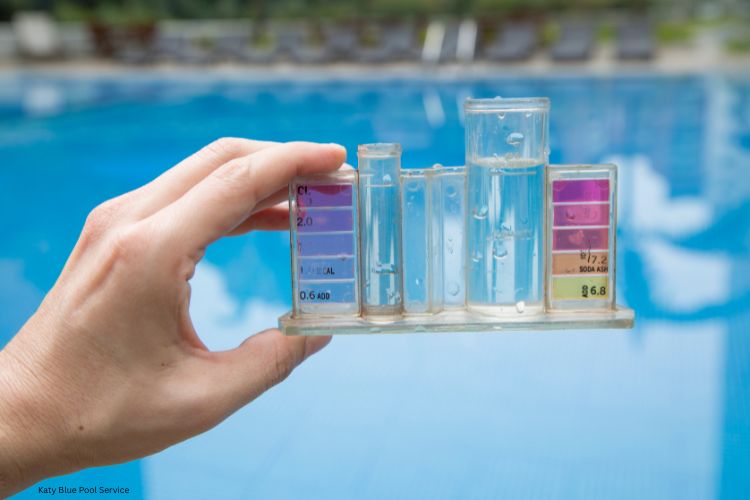
Use a reliable test kit or digital meter. Measure pH, free chlorine and TA at least twice weekly in summer. Record results in a log to track trends.
Step 2: Adjust Alkalinity First
If TA is below 80 ppm or above 120 ppm, correct it. Add sodium bicarbonate to raise TA; add acid carefully to lower it. Circulate for several hours and retest.
Step 3: Adjust pH
Once the TA is correct, adjust the pH to the 7.2–7.6 range using acids or soda ash. Make small adjustments; overshooting can create a cycle of adding more chemicals.
Step 4: Adjust Chlorine
After pH is stable, adjust free chlorine to 1–3 ppm. Use liquid, granular or tablet forms based on your system. Shock the pool periodically, especially after heavy use or rain.
Step 5: Test and Adjust Other Parameters
Check calcium hardness, CYA and TDS monthly or as needed. Adjust accordingly to maintain overall balance and protect your pool from corrosion or scale.
Tips for Success
- Add chemicals to water, not water to chemicals: This prevents dangerous reactions and splashes.
- Circulate after adjustments: Run your pump to distribute chemicals evenly. Retest after several hours.
- Make gradual changes: Large doses can overshoot target ranges and waste chemicals.
- Keep records: A logbook of test results helps you anticipate seasonal changes and maintain consistency.
- Use quality chemicals: Low-quality products may contain impurities that disrupt balance.
- Protect your skin and eyes: Always wear gloves and goggles when handling chemicals.
Seasonal Adjustments for Katy Pools
The Gulf Coast climate means that pool chemistry is not a set‑it‑and‑forget‑it endeavor. During spring and fall, when temperatures fluctuate widely between day and night, pH and chlorine demand can swing unexpectedly. In early spring, pollen and debris can overwhelm filters and consume sanitizer, so test daily and brush surfaces often. As summer heat arrives, UV exposure accelerates chlorine breakdown; consider raising free chlorine to the upper end of the recommended range and ensuring cyanuric acid is adequate. After heavy rain or tropical storms, test the water immediately to correct dilution and contamination. In winter, when the water is cooler and use is minimal, chlorine demand decreases and pH may drift upward due to reduced aeration. Adjust weekly instead of multiple times per week, and monitor alkalinity to prevent pH bounce during long periods between tests. Recognizing seasonal patterns in Katy helps you adjust proactively rather than reactively.
Safe Handling and Storage of Pool Chemicals
Chemicals keep your pool safe, but they can be dangerous if mishandled. The CDC emphasizes reading product labels and following manufacturer directions carefully. Always add chemicals to water, not water to chemicals, to prevent violent reactions. Wear protective gloves and eyewear to shield skin and eyes from splashes and fumes, and avoid inhaling dust when measuring powders. Store chemicals in a cool, dry, ventilated area away from direct sunlight and heat sources. Keep different types of chemicals separate to prevent accidental mixing, and ensure containers are tightly sealed and out of reach of children and pets. Never store liquid chlorine near acids; accidental contact can release toxic chlorine gas. Dispose of old or unused chemicals according to local guidelines—never pour them down storm drains or mix them with other substances. By handling and storing chemicals responsibly, you protect yourself, your family and the environment while ensuring the chemicals remain effective when you need them.
Dealing With Common Problems
Algae Outbreaks
If you notice green or yellow patches, test the water immediately. Low chlorine or imbalanced pH often leads to algae. Brush affected areas, shock the pool and adjust chlorine and pH. Maintain proper circulation and backwash or clean the filter.
Cloudy Water
Cloudiness may result from high pH, low chlorine, high calcium hardness or poor filtration. Test and adjust chemical levels, clean your filter and run the pump longer. Clarifiers can help coagulate tiny particles so the filter can remove them.
Corrosion and Staining
Rust stains or rough surfaces indicate low pH or low calcium hardness. Test and raise the pH and CH within recommended ranges. Use a metal sequestrant if high metals are present.
Scale Formation
White, chalky deposits indicate high pH, high alkalinity or high calcium hardness. Lower pH and alkalinity, and consider partial draining to dilute calcium. Use a scale remover product if needed.
How Katy Blue Pool Services Helps Keep Chemistry Balanced
Balancing pool chemistry can feel like a science experiment. Katy Blue Pool Services takes the guesswork out of chemical management. Our certified technicians use professional-grade test kits to measure all key parameters. We adjust chemicals in the correct order—alkalinity, pH, chlorine—and monitor additional factors like calcium hardness and CYA. Regular service visits ensure your pool remains balanced despite weather changes and bather loads. For homeowners who prefer DIY but need occasional guidance, we offer water testing and chemical delivery services. With our help, you can enjoy crystal-clear water without worrying about the complexities of chemistry.
Conclusion
pH, chlorine and alkalinity form the foundation of pool chemistry. Keeping these three parameters in harmony ensures safe, comfortable swimming, protects your equipment and maintains crystal-clear water. Understanding how each parameter works and how they interact empowers you to prevent problems before they start. Test your water regularly, adjust chemicals methodically and monitor other factors like calcium hardness and stabilizer. For those seeking expertise or convenience, Katy Blue Pool Services provides professional testing and balancing, ensuring your pool remains a healthy oasis in the Texas heat. With a little knowledge and routine care, mastering pool chemistry becomes second nature, and your backyard retreat stays inviting all season long.
